
Getting us there: $80–$180
The standard Sydney attendance fee. Ours is stated on the call, before you decide anything.
Some plumbing waits politely for a weekday. The rest, water through a light fitting, sewage in the shower, a whiff of gas: needs someone now. Our Dural line is answered by a licensed plumber around the clock, and the first thing you get is help, not a hold queue.
Split a night shift with us and you would see the same short list on repeat: mains-pressure water escaping from a burst or a failed flexi hose, sewage rising through the lowest floor waste after roots close the line, hot water tanks letting go after years of quiet corrosion, and the gas smell nobody wants to be wrong about. Every one of them shares a rule, the damage compounds while you wait. First job on the phone is stopping that: for water, the meter’s stop valve, turned clockwise, buys you calm while the van is moving.
And then there are the calls people feel silly making, the only toilet in the apartment out of action, a drain backing up the evening before settlement, a unit block’s shared stack misbehaving on a Sunday. Make the call anyway. Between Dural, Galston, Kenthurst, Cherrybrook and the rest of the Hills District, someone from our crew is always on, and after-hours means a plumber at your door, not a message bank.


Properties on septic or an on-site treatment system have a failure mode town sewer does not: the problem can be the system itself rather than the pipe to it, and the warning signs are wet ground and smell rather than a backed-up fixture.
Away from town sewer, many Dural blocks rely on septic tanks and absorption trenches that block, fill or fail and back up into the house.
If the ground over the trench is soggy in dry weather, stop putting water into the system and call. Continuing to load a failed field turns a pump-out into an excavation, and that is the difference between a bad evening and a bad month.
A drain on a slope moves water fast, and fast is not always good. Waste can outrun the liquid carrying it on a steep run and settle at the first flat section, building up at exactly the same spot each time.
Heavy rain off Dural’s sloping garden blocks and long driveways overwhelms pits and ag drains, choking stormwater lines until they surcharge.
The tell is a blockage that recurs at the same interval in the same place. That is a gradient problem, not a usage problem, and no amount of careful flushing fixes it: the answer is to see the profile of the line and correct the section that is wrong.
A yard that floods in every serious downpour is a different problem from one that flooded once in a freak storm. The first is a blocked or undersized line and it will keep happening; the second is weather.
Telling them apart takes a camera on a dry day, not a guess in the rain. If it has happened twice, book the inspection between storms, clearing a surcharging pit at the height of it costs more and tells you less.
We would rather be straight about drive times than optimistic. Properties on the outskirts of Dural and out through Galston, Kenthurst, Cherrybrook are further from the depot than the built-up streets, and at 3am the difference is real.
On big acreage blocks the run from the house to the trench or street is long and shallow-graded, so silt settles and a camera is needed to find the blockage.
What does not change is what happens on the phone: the isolation advice, working out whether it is safe to wait until first light, and an arrival window we will actually meet rather than one that sounds better.
Dural sits in the leafy, semi-rural heart of Sydney’s Hills District (postcode 2158), an acreage suburb of large garden blocks, established nurseries and bushland strung along Old Northern Road and Round Corner. Bordering Galston, Kenthurst, Cherrybrook and Glenhaven, many homes here run on septic and tank water with long private drain lines, and we know the local ground well.
On sloping ground the problem is rarely where the symptom is. Water leaves a failure at the highest point and surfaces at the lowest, which can be several properties away and well downhill of anything you would think to look at.
It is also why a neighbour's overflowing gully is sometimes your blocked line, and occasionally the reverse. We work uphill from the symptom rather than digging where the water appears.
On a large block the run from the house to the connection point can be sixty metres or more, and all of it is yours. That is a lot of pipe with no street to inspect it from, crossing ground that vehicles drive over and trees grow beside.
It also means a blockage can sit a long way from anything you can see. A camera and a locator save real money here, the alternative is guessing, and guessing on a private line means digging.
The standard Sydney attendance fee. Ours is stated on the call, before you decide anything.
Business hours runs $120–$160; nights, weekends and holidays sit above it. That is the honest cost of a plumber on the road at 3am.
What most real after-hours jobs come to once attendance, the first hour or two and small parts are tallied.
Slab access, gas line work, walls opened overnight. Quoted to you in full before a tool comes off the van.
If your description says it can safely keep until morning, we say exactly that and book you at weekday rates instead. Ask.
The price is agreed before work starts, including at 2am. Figures here are indicative of the 2026 Sydney market rather than a quote from us, you get your own number as a fixed price before any work starts.
The person answering can actually help: what to shut off, whether it truly needs tonight, and a straight ETA for Dural.
Emergency vans carry the usual suspects, pipe, valves, hoses, drain machines, because a fix that waits for a supplier is not an emergency fix.
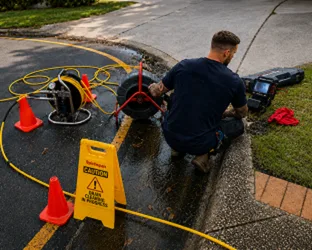
Damage stops first. Then the repair is priced, fixed, and you say yes or no with the number in front of you.

Almost always completed on the spot. Where a genuine part order is unavoidable, you are left sealed, safe and running until it arrives.
Call and describe it. If it can hold, we will tell you, and book you at daytime rates. If it cannot, you will be glad you rang tonight.
Phone is fastest at any hour. Form enquiries after dark ring through to the on-call plumber, not an inbox that opens at nine.

Leave your details and our local Dural team will call you back fast.