
Basic detection, $200–$400
Straightforward jobs: a limited pipe run, good access, the leak confirmed and marked.
A leak you cannot see is still on the meter, still under the slab, still soaking the wall cavity. We find them with listening gear, thermal imaging and pressure testing, so the repair needs one small hole in the right place, not three big ones in guesses.
Every concealed leak makes three things: a sound, a temperature difference, and a pressure drop. The gear reads all three. Acoustic equipment listens for the specific frequency of water escaping under pressure and gets louder as we track along the line; thermal imaging paints the wet path through a wall or the warm plume of a leaking hot line under a slab; and isolating sections of pipework against a pressure gauge proves exactly which run is losing water and which is sound.
Cross-referenced, they put an X on the floor within centimetres. That precision is the entire point, the difference between lifting three tiles and re-tiling a bathroom. It matters double under Dural’s older homes, where pipes wander in ways no plan ever recorded, and the "obvious" place to dig is reliably wrong.

Away from town sewer, many Dural blocks rely on septic tanks and absorption trenches that block, fill or fail and back up into the house.
Rural properties have far more plumbing outside the house than in it: irrigation, troughs, garden lines, a shed, sometimes a second dwelling. Any of it can leak, and most of it is old.
Detection here starts by isolating the property into sections and eliminating them one at a time. It is methodical rather than clever, and it is the only approach that does not end in guesswork.
Mains pressure rises as elevation falls, and properties low on a slope routinely sit at the top of the acceptable range. Sustained high pressure is a genuine cause of leaks rather than merely a contributor.
Heavy rain off Dural’s sloping garden blocks and long driveways overwhelms pits and ag drains, choking stormwater lines until they surcharge.
If your property is low-lying relative to the surrounding streets and you have had more than one fitting fail, a pressure test costs very little and a limiting valve costs little more. It is the cheapest leak prevention available.
On big acreage blocks the run from the house to the trench or street is long and shallow-graded, so silt settles and a camera is needed to find the blockage.
On a large block the service run from the meter to the house can be very long, all of it your responsibility, crossing ground that vehicles drive over and trees grow beside.
A leak anywhere along it is invisible from the house and expensive to find by digging. Correlation between two points on the run narrows it to a few metres, which is the entire difference between one excavation and a trench.
Dural sits in the leafy, semi-rural heart of Sydney’s Hills District (postcode 2158), an acreage suburb of large garden blocks, established nurseries and bushland strung along Old Northern Road and Round Corner. Bordering Galston, Kenthurst, Cherrybrook and Glenhaven, many homes here run on septic and tank water with long private drain lines, and we know the local ground well.
Sloping blocks are full of retaining structures, and pipework often runs behind or beneath them because there was nowhere else to put it. A leak in that position saturates backfill, and saturated backfill is what makes retaining walls move.
Water showing at the base of a wall is worth treating as urgent even when the volume looks trivial. The plumbing repair is small compared with what the wall costs.
On a property running tank water, a supply leak shows up as consumption rather than as water, a tank dropping faster than the household explains, or a pump cycling when nothing is being used.
A pump that starts periodically with every tap closed is the clearest leak indicator there is on a rural property, and it is worth acting on immediately. It means the system is losing pressure somewhere continuously.
On sloping ground, water leaving a pipe travels along whatever path is easiest until something stops it. By the time it appears it can be metres from the failure, several properties away, and always further down.
So the damp patch is a starting point, not a destination. We work uphill from it with correlation equipment rather than digging where the evidence happens to be visible.
A concealed leak is most often discovered by a water bill rather than by water. By then it has usually been running a full quarter, which is both the bad news and a useful clue about size.
Compare the last three bills rather than two. A single high quarter can be a garden or a visitor; a steady climb with no change in the household is a leak until something proves otherwise.
Straightforward jobs: a limited pipe run, good access, the leak confirmed and marked.
The standard concealed-leak hunt with the full kit on site, acoustic, thermal, pressure testing.
Long pipe runs, poor access or multiple leaks add gauge-and-listen time past the first hour.
Deep slab lines and complex multi-storey tracing sit at the top of the Sydney range.
Detection tells you exactly what the repair involves, so the repair quote is built on evidence. One crew does both, no handover, no second call-out fee.
Weigh it against the alternative: exploratory demolition starts at more than detection costs, and it starts in the wrong place. Figures here are indicative of the 2026 Sydney market rather than a quote from us, you get your own number as a fixed price before any work starts.

The meter test done properly, plus your bills. If the evidence says there is no supply leak to find, you hear exactly that, free of a detection invoice.
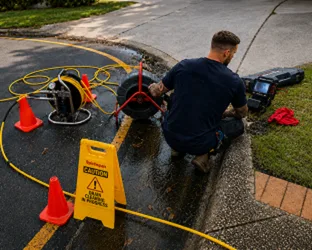
Isolating pipework section by section against a pressure gauge, hot versus cold, line by line, convicts one run and acquits the rest.

Acoustic tracking and thermal imaging walk the guilty run until the signals stack. The X on the floor is accurate to centimetres.

Access opens exactly at the mark; the failed section is repaired and pressure-tested. If the run's condition argues for a reroute instead, both numbers land first.
Then the leak is real and already on the clock. Book the detection before it surfaces somewhere expensive.
Non-invasive detection, evidence before quotes, and one crew for the find and the fix.

Leave your details and our local Dural team will call you back fast.