
Hoses & connectors: $100–$200
The brittle old flexible behind the cooktop: tiny part, outsized share of the leaks we find.
There is no "close enough" in gas. Every job we do in Dural, a leak chased down, a cooktop connected, a new line run to an outdoor kitchen: finishes the same way: holding pressure on a gauge, certified, documented. That is the whole standard, and it is not negotiable.
NSW law reserves every millimetre of gas work for licensed gasfitters, connecting an oven included, because gas fails differently to water. A water mistake stains a ceiling; a gas mistake is a leak you breathe, a fire you host, or carbon monoxide you never smell. It is no coincidence that the leaks we chase most often trace back to a confident handyman and a roll of thread tape.
The licence is not the paperwork, it is the finish line it enforces: the whole installation held against a manometer until the needle stays put, appliances burning correctly with the ventilation they need, work done to AS/NZS 5601, the standard your insurer will ask about if it ever matters. Across Dural and the Hills District, that gauge test is how every one of our gas jobs ends.


Cylinder and bulk tank installations have clearance requirements from boundaries, openings, ignition sources and vehicle paths, and those are the things most often wrong on a property where a shed or deck has been added since.
Every job finishes on a pressure test with a certificate. Gas has no visible half-finished state: an installation either holds and is certified, or it is not complete.
It is worth a check whenever anything is built near an existing installation. A compliant tank position can become non-compliant because something was built beside it, and that surfaces at sale time if not before.
Sizing is the quiet failure. Adding an appliance to a line that was adequate for the original load can starve everything else on it, so we check what the existing run can actually carry before extending it.
On a large property the run from the tank to the house, or out to a shed, a studio or a second dwelling, can be substantial, and pressure drop over distance is real.
An appliance starved at the end of a long undersized line behaves like a faulty appliance. Sizing the run correctly is the fix, and it is far cheaper to establish before the trench is closed than after.
Dural is overwhelmingly separate houses, 80.3% of occupied dwellings by the ABS 2021 Census, so the gas work runs the full range: cooktops and ovens, outdoor hot water units, heaters, and new runs for extensions.
Beyond the reticulated network, gas means bottles or a bulk tank. LPG runs at a different pressure from natural gas, uses different jets and regulators, and appliances are not interchangeable between the two without conversion.
It is the single most common mistake we correct on rural properties: a natural gas appliance bought secondhand and connected to LPG. It will burn, badly and unsafely, and the yellow flame is the giveaway.
Gas that burns incorrectly produces carbon monoxide, which has no odour and no colour. It is the reason a badly serviced heater is more dangerous than a leaking pipe, the leak announces itself and this does not.
The visible warning is flame colour. A gas flame should burn blue. Yellow or orange flames, soot around an appliance, or condensation on windows when a heater runs all mean stop using it and book a service.
Before any new appliance, the question is whether the meter and the existing runs can supply it alongside everything already connected. A system sized for a cooktop and a hot water unit will not automatically carry a pool heater as well.
Where it will not, the answer is usually an upgraded meter or a resized run rather than a smaller appliance. Establishing that first avoids buying something that can never perform properly.
Gas installations surface at transaction time. Buyers' inspections flag uncapped lines and old unflued heaters, insurers ask about compliance, and commercial leases usually require current certification.
A test before listing is cheap and removes a negotiating point. If you are buying an older property, having the gas installation tested before settlement is one of the better-value inspections available.
The brittle old flexible behind the cooktop: tiny part, outsized share of the leaks we find.
Thread and valve leaks sealed properly and proven again on the gauge.
Corroded or damaged sections replaced; concealed lines with access work run $800–$2,500.
Connected, tested, certified. New line or bayonet to reach it quoted fixed on top.
Sydney's 2026 licensed-gasfitter range; attendance typically $80–$150. Certification is included, because without it there is no job.
The receipt that matters is not paper: it is the needle on the manometer refusing to drop. Figures here are indicative of the 2026 Sydney market rather than a quote from us, you get your own number as a fixed price before any work starts.
Suspected leaks start with isolation at the meter and ventilation. Diagnosing a system still feeding its own leak is how amateurs get hurt.
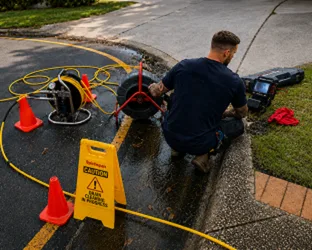
A manometer proves whether the installation loses pressure; detection fluid and instruments then walk it back to the guilty joint or run.

The failed piece is replaced with compliant material to AS/NZS 5601, one connector or a full rerun, never sealant and optimism.
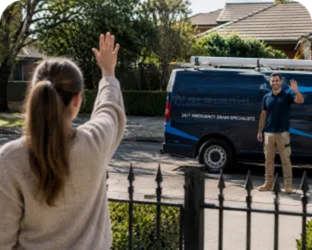
The whole installation holds on the gauge, appliances relight to clean blue flames, ventilation checks out, and the compliance record is yours.
Cooktop, heater or barbecue point: connected, tested and certified in one visit. The right way costs less than the redo.
Licensed, pressure-tested, documented: every time. Smelling gas this minute? 131 909 from outside comes first.

Leave your details and our local Dural team will call you back fast.